Digital Media Collections was project-based, studio-style exercise in designing a resource collection. We focused on conceptual aspects of design including understanding the purpose and audience of the collection, selecting resources, describing and organizing resources, and determining how to present resources to users. We implemented our ideas using the Open Video Digital Library Toolkit.
Primary class project: digital video collection design project
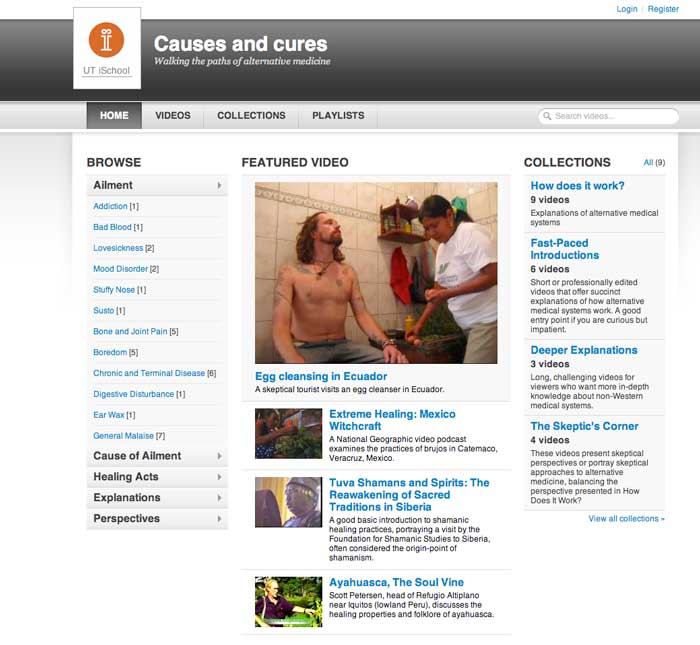
Our main class project was to create a prototype resource collection consisting of approximately 30 videos on the assigned subject of alternative medicine and wellness. We worked to select, describe, and organize the resources to make them appealing and useful to the intended audience. We worked on the information architecture of the digital library and the information design of individual web pages, concentrating on how design decisions can address both the rhetorical goals of the collection designer and the information needs of the target audience.
Our design process was divided into multiple phases:
- Preliminary reflections. Making explicit our goals and assumptions for the project.
- User and subject area research. This included building a source library from which we selected collection resources.
- Creating personas and scenarios to imagine how potential audience members will interact with the collection.
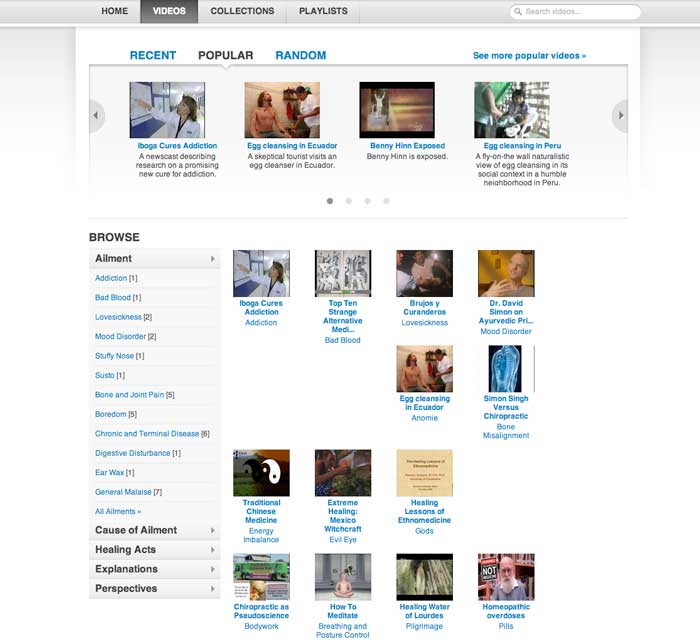
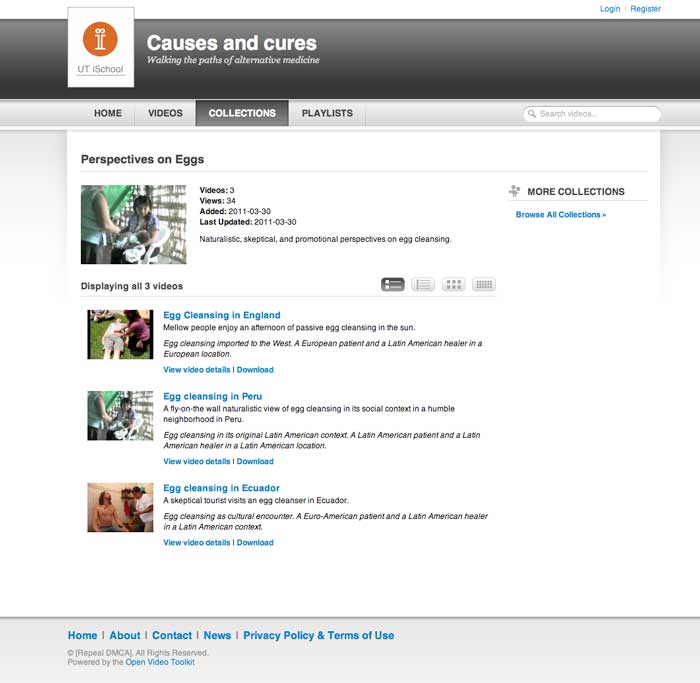
- Creating a prototype collection showing how the envisioned experience takes form in a specific digital library environment. Developing a system of descriptive attributes and values for resource description and access. Making good use of the Open Video Digital Library Toolkit's built-in metadata and description fields to facilitate navigation, resource discovery, and the user experience.
- Analysis, critique, and refinement. Putting the prototype through multiple design critiques and iterations.
In addition to our digital collection prototype, we wrote a design brief, which went through multiple revisions as the collection design advanced. Our brief described our communicative goals for the collection, our interpretation of the audience and its information needs, and our strategy for reflecting these goals and needs through the selection, organization, and description of collection resources and through the information design of the digital library environment.
In a final reflective essay, we examined the process of creating a collection experience. I especially focused on the complex negotiation of authorial and audience goals in collection design and on what concepts I had found most useful for creating an appealing and informative collection.
Second class project: critique of an existing collection
In addition to critiquing our own collection and our classmates', we analyzed an existing video library to describe how it works as an information experience, from the differing perspectives of audience, author, and information critic. The design critique was a recurring feature of the overall coursework and design process.
Sample video collections
Our final product cannot be linked to because it contains copyrighted videos. The design process and digital library construction techniques that we studied in this class can be applied in most contemporary digital library environments. Screenshots of my digital collection prototype are presented below.